How Hrutul’s YOUFORIA Is Redefining ‘Spiritual Entertainment’ for Millennials and Gen Z
Something unusual is happening in India’s live entertainment industry. A spiritual concert is pulling in thousands of young people, and they are not attending out of obligation. They are showing up because they feel seen.
Hrutul’s YOUFORIA is not a bhajan night and not a TED Talk with background music. It is a full-scale visual concert that blends ancient Indian philosophy with cutting-edge stage design. The result feels closer to a music festival than a sermon, yet it leaves people thinking long after the lights go out.
The Six-Screen Spectacle That Feels Personal
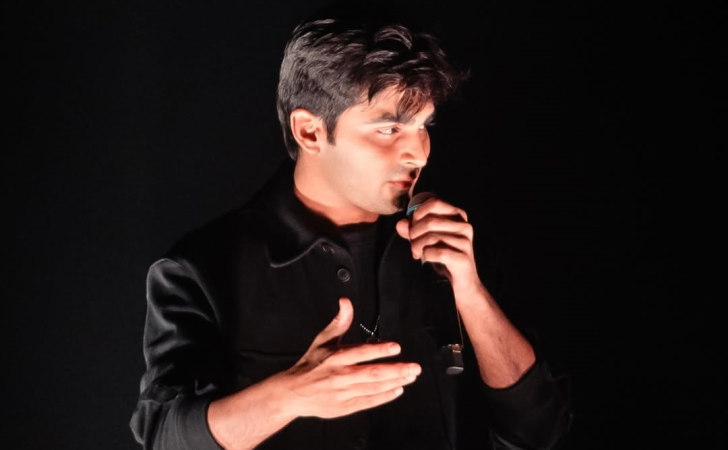
Hrutul / IG / When YOUFORIA Chp. Parth premiered in Mumbai, the 111-minute show featured nine live singers, six dancers, and 18 original compositions performed inside a hexagonal layout of six massive screens.
This proprietary HEXAIMMERSIVE format surrounded the audience with near 360-degree visuals. Each screen was larger than a standard cinema display, enveloping viewers in cinematic storytelling. The stage did not feel separate from the crowd, and the boundary between performer and spectator slowly dissolved.
Earlier runs in Ahmedabad and Surat had already built momentum. However, Mumbai marked a turning point. Around 2,700 people filled the venue, and they did more than clap politely.
The applause stretched longer than expected, and the crowd stayed emotionally tuned in throughout the show. Filmmaker and choreographer Farah Khan attended and remained visibly engaged during key moments. At one point, Hrutul and the audience spontaneously recited her iconic Kainaat dialogue together, turning the arena into a shared emotional space.
Mythology Meets the Digital Mind
At its core, YOUFORIA Chp. Parth explores spirituality, identity, and human consciousness through a modern lens. The show draws from Indian mythology and history, revisiting figures like Krishna, Ram, Raavan, and Karna as psychological archetypes rather than distant gods.
These characters mirror today’s inner battles. They reflect the pressures of capitalism, the noise of social media, and the fragile nature of modern relationships. Instead of preaching about right and wrong, the narrative asks hard questions about attention, ego, and meaning.
A striking device in the show features a virtual astronaut who interrupts the protagonist’s monologues. This character acts as an inner skeptic, challenging preachy moments and pulling the story back to grounded reality. That tension creates a musical back-and-forth that feels honest rather than moralistic.
The 18 original songs power the narrative forward. Hrutul composed them during his ambitious #100Weeks100SongsChallenge, where he wrote one song every week during lockdown. That archive gave the show emotional depth, allowing reflective verses to sit alongside high-energy crescendos.
Music carries the heavier ideas without making them feel heavy. Complex themes about consciousness and distraction land softly because they arrive through melody and rhythm. The audience absorbs the message without feeling lectured.
Why Millennials and Gen Z Are Showing Up
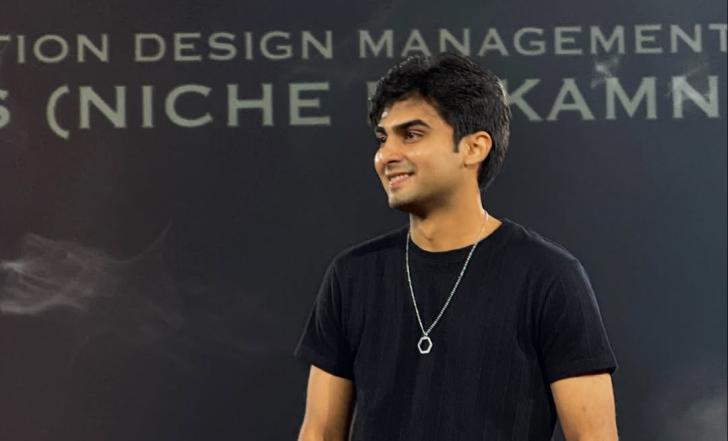
Hrutul / IG / Young audiences today are not satisfied with passive entertainment. They scroll through endless content every day, yet much of it leaves them numb.
YOUFORIA taps into that restlessness by offering something that feels immersive and intentional.
Hrutul has said that today’s generation wants to feel, question, and understand. YOUFORIA gives them space to do exactly that. It packages introspection inside a sensory experience that feels cinematic and contemporary.
Millennials and Gen Z have already begun looking for meaning in unexpected places. Meditation apps sit next to therapy sessions, astrology charts, and rediscovered ancient texts. In a world that moves faster every year, many people are searching for something steady. YOUFORIA steps directly into that mix of curiosity and uncertainty.
The HEXAIMMERSIVE format is a big part of why it works. This generation grew up surrounded by layered media—surround sound, VR experiments, and ultra-sharp screens everywhere. A single stage and spotlight would struggle to keep their attention. YOUFORIA’s six-screen environment feels closer to the kind of visual world they are used to navigating.
Yet, beneath the spectacle sits a philosophical thread. The show argues that old ideas about meaning and self-understanding still matter, even in an age shaped by algorithms. By weaving those traditions into a modern visual experience, Hrutul describes the project as something new: spiritual entertainment.